Hi little musicians!
We are going to explores the relationship between quarter and eighth notes in 4/4 time, but in subsequential videos, we will add half notes, rests, and maybe even a bit of triple meter to the mix! Ready, steady, GO!

Hi little musicians!
We are going to explores the relationship between quarter and eighth notes in 4/4 time, but in subsequential videos, we will add half notes, rests, and maybe even a bit of triple meter to the mix! Ready, steady, GO!
Buenas musiquit@s.
Vamos a finalizar el curso con un cuento musical titula "The Music in Me"
Sinopsis:


This heartening tale of a young boy who is on a quest to find his "inner music" unfolds with rich color illustrations that will keep you humming, strumming and tapping for more.
Buenas musiquit@s.
Vamos a repasar el trabajo de aula. Hoy veremos….¡INSTRUMENTOS DE PERCUSIÓN!
¿Qué son? Son aquellos instrumentos que para sonar hay que percutirlos, agitarlos o rascarlos, ¡MIRA!
Profundicemos: En el siguiente genially podrás encontrar ampliada la información, ejemplos y juegos. Espero que lo disfrutes.


Percussion instruments include any instrument that makes a sound when it is hit, shaken, or scraped. It's not easy to be a percussionist because it takes a lot of practice to hit an instrument with the right amount of strength, in the right place and at the right time. Some percussion instruments are tuned and can sound different notes, like the xylophone, timpani or piano, and some are untuned with no definite pitch, like the bass drum, cymbals or castanets. Percussion instruments keep the rhythm, make special sounds and add excitement and color.
UNIT 5
LET’S LISTEN
LET’S SPEAK
WORK IN PAIRS: Look at the picture and imitate a sound. Guess the sound!

LET’S SING
LET’S TAP AND CLAP
LET’S DANCE
LET’S PLAY INSTRUMENTS
MUSIC WORKSHOP
LET’S IMITATE ANIMALS!
RESEARCH SHEET:

Good morning mini musicians!
Today, I'm going to introduce you to... MIDDLE C!!
Middle C is the name given to the musical note C which is in the middle of the piano keyboard. It is not actually quite the middle note of the keyboard, but very nearly, and of all the Cs on the piano it is the one nearest to the middle.
When writing Middle C in music notation it is just below the stave when using the Treble Clef.
The Middle C sits on a ledger line (an extension of the stave written just for one note)
Middle C is the lowest note of the flute. It is a fairly low note for a child or woman to sing, but a fairly high note for a man to sing.
(Kids Encyclopedia Facts)

ANCIENT TIMES:
Even in the stone age people made music. The first music was probably made trying to imitate sounds and rhythms that occurred naturally. Human music may echo these phenomena using patterns, repetition and tonality. This kind of music is still here today. Shamans sometimes imitate sounds that are heard in nature. It may also serve as entertainment (games), or have practical uses, like luring animals when hunting.
Some animals also can use music. Songbirds use song to protect their territory, or to attract a mate. Monkeys have been seen beating hollow logs. This may, of course, also serve to defend the territory.
The first musical instrument used by humans was probably the voice. The human voice can make many different kinds of sounds. The larynx (voice box) is like a wind instrument.
The oldest known Neanderthal hyoid bone with the modern human form was found in 1983, indicating that the Neanderthals had language, because the hyoid supports the voice box in the human throat.
Most likely the first rhythm instruments or percussion instruments involved the clapping of hands, stones hit together, or other things that are useful to keep a beat. There are finds of this type that date back to the paleolithic. Some of these are ambiguous, as they can be used either as a tool or a musical instrument.
It is not known what the earliest music of the cave people was like. Some architecture, even some paintings, are thousands of years old, but old music could not survive until people learned to write it down. The only way we can guess about early music is by looking at very old paintings that show people playing musical instruments, or by finding them in archaeological digs (digging underground to find old things). The earliest piece of music that was ever written down and that has not been lost was discovered on a tablet written in Hurrian, a language spoken in and around northern Mesopotamia (where Iraq is today), from about 1500 BC.

Buenas musiquit@s,
Hoy vamos a ver el ACORDE.
1. Definición:
Los acordes son conjuntos de dos o más notas tocadas al mismo tiempo. Los acordes más básicos están formados por tres notas. Están construidos alrededor de su nota fundamental (la nota de partida). El resto de las notas de un acorde están determinadas por la calidad del mismo.
2. Ejemplo:

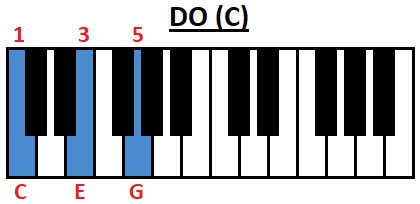
3. Actividades:
Y ahora…


Buenos días musiquit@s.
Os dejo un vídeo ilustrativo sobre el Barroco Musical. Espero que os guste.
Y ahora…

Buenas musiquit@s.
Os dejo algunos vídeos de ampliación sobre el Renacimiento Musical.
Y ahora…
Buenas musiquit@s.
Hoy os dejo unos vídeos con ritmos, tanto de percusión corporal como con vasos, vasos y palillos y por último, un rap.
Espero que lo disfrutéis.

Buenos días musiquit@s.
Hoy vamos a trabajar el TIMBRE musical, que es ni más ni menos, la cualidad del sonido que nos permite reconocer lo que está sonando, distinguir un sonido de otro, su procedencia.
Veamos algunos vídeos para poneros a prueba.
Espero que lo disfrutéis.
- DEFINICIÓN Y JUEGO CON MOVIMIENTO:

Definition: Timbre is a quality of sound. It is what makes two different musical instruments sound different from each other, even when each instrument plays the same musical note.
Buenas musiquit@s.

Hoy os traigo un cuento muy musical “SOUNDS ALL AROUND”. Un cuento en el que además de entretenernos con una historia sonora, deberemos reproducir sus sonidos.
Espero que los disfrutéis.

Remeber BEAT BODY PERCUSSION


 Había un hombre muy tímido que de pronto sintió la necesidad de tragarse... ¡un violonchelo! Y lo peor, es que siguió on otros instrumentos. ¿Quieres saber lo que sucedió después? Pues el vídeo tendrás que ver y el libro que leer.
Buenas musiquit@s.
Hoy veremos la música en la EDAD MEDIA.
Lo primero que tenemos que saber es que es un periodo que durará 10 siglos: 476 d.C.-1492 d.C.
Su música se dividirá en dos grandes grupos: música religiosa y música profana.
Instrumentos musicales de la Edad Media: rabel, flauta dulce, salterio, arpa, zanfoña, cítara, sacabuche... En el siguiente vídeo podréis disfrutarlos.
Danzas en la Edad Media: entre las muchas que hubo las más populares fueron las danzas en línea y las danzas en círculo. Os dejo un branle, farandola y danza del oso.
Y ahora, en el siguiente enlace...
Buenas musiquit@s.
Hoy vamos a conocer una de las agrupaciones
más importantes de la música: la ORQUESTA.
La palabra orquesta viene del griego y
significa “lugar para danzar”, ya que en los anfiteatros había un espacio para
bailarines, músicos, etc. llamado de esta forma.
La orquesta es una agrupación de músicos
con diferentes instrumentos que tocan entre ellos.
Los instrumentos que podemos encontrar en
una orquesta están organizados por familias: cuerda, viento y percusión.
Hay diferentes tipos de orquesta, como la
orquesta de cámara u orquesta sinfónica.
Os animo a
que pinchéis en el siguiente enlace para que podáis ver vídeos sobre la
evolución de la orquesta. Es muy interesante: Genially Orquesta.

An orchestra is
a group of musicians playing instruments together. They usually play
classical music.
A
large orchestra is sometimes called a "symphony orchestra" and a
small orchestra is called a "chamber orchestra". A symphony orchestra
may have about 100 players, while a chamber orchestra may have 30 or 40
players. The number of players will depend on what music they are playing and
the size of the place where they are playing.
The word "orchestra" originally meant the semi-circular space in front of a stage in a Greek the atrae which is where the singers and instruments used to play. Gradually the word came to mean the musicians themselves.
(https://kids.kiddle.co/Orchestra)

El FLAMENCO, así con mayúsculas, es uno de nuestros patrimonios más importantes. De hecho, el día 16 de noviembre de 2010, fue nombrado Patrimonio Cultural Inmaterial de la Humanidad, siendo el reconocimiento mundial más importante otorgado a una cultura.
Nace de la mezcla de culturas como la árabe, judía, cristiana y gitana, presentes en nuestra península en la Edad Media.
En el siglo XIX aparece el flamenco tal y como lo conocemos en la actualidad. Es entonces cuando nacen los "Cafés Cantantes" que ofrecerán el estatus de profesional a los músicos, cantantes y bailaores flamencos. Sobre 1920 el flamenco se comercializa y teatraliza. A lo largo del siglo XX va cogiendo cada vez más fuerza y ya en el siglo XXI músicos de diferentes estilos incorporarán sus sonidos y ritmos. De esta manera nacerá el Flamenco Fusión.
El flamenco se compone de 3 elementos básicos: el cante, el toque y el baile.
-Cante: definido por la R.A.E. como cante andaluz agitanado, cante más genuino andaluz de profundo sentimiento. Se divide en "cante chico" y "cante grande".
- Baile: elemento de danza, incorporado al flamenco hace dos siglos, ya que anteriormente simplemente se cantaba y se acompañaba con alguna pequeña percusión. Será dramático y expresivo y ser realizará con manos, brazos, cuerpo y pies con su zapateao.
- Toque: se le conoce así a la guitarra flamenca.
Los elementos básicos del flamenco le dan vida a los diferentes palos flamencos. Son cada uno de los diferentes estilos flamencos.
Flamenco developed from the multilingual,
multicultural mix o Arabs, Jews, Christians and Gypsies present in Andalusia in
the Middle Ages. Flamenco may have risen from the streets by the 19th century
as we know today. Then born the “cafés cantantes” that offered performers
professional status for the first time. By the 1920s, flamenco had become
highly commercialized and theatricalized.
As the audience for flamenco
continued to expand in the late 20th and early 21st centuries, musicians from
around the world began to incorporate its sounds and rhythms in a wide variety
of musical idioms. Nuevo Flamenco was the term used to describe fusions of
flamenco with Western pop music, jazz, blues, rhythm and blues, and rap, as
well as various forms of Latin American, Arabic, and African music.
On November 16, 2010, UNESCO declared Flamenco one of the Masterpieces of the Oral and Intangible Heritage of Humanity.
Has three basic elements: CANTE, BAILE and TOQUE.
Fo every element is important to
know the “PALOS FLAMENCOS”: Flamenco palos are the traditional forms that
provide the overarching theoretical and emotional context for the music itself.
Each distinct palo has its own characteristics–a particular rhythmic
pattern–flamenco rhythms are called compas.